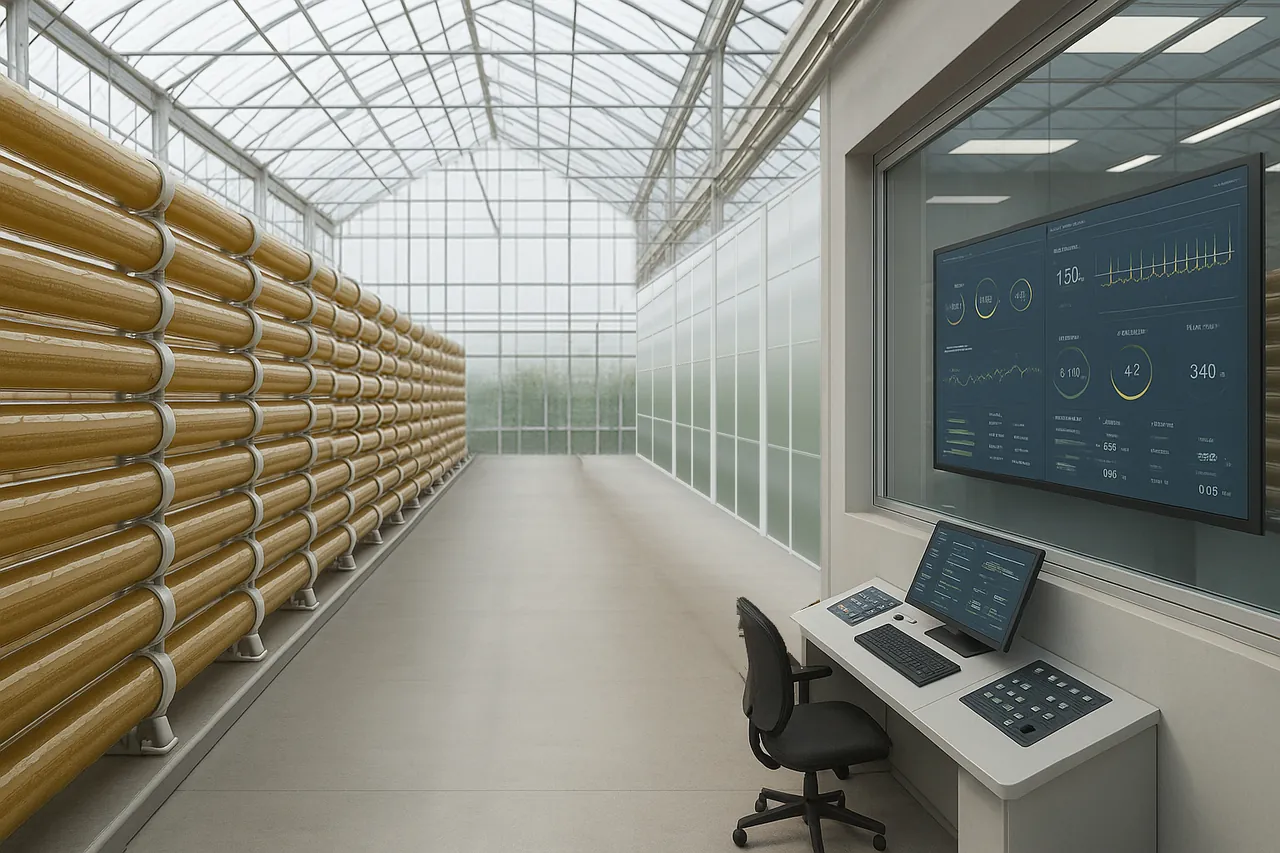
GEE BioTech is preparing a building permit to construct a greenhouse-photobioreactor facility as a pilot and demonstration site for its Direct Atmospheric Carbon Capture Algal System (DACCAS) technology. The facility will be in the Lake Lucerne area, close to the Lucerne School of Engineering and Architecture (HSLU) and GEE’s Laboratory.
The facility will house a novel 1000 liter, tubular photobioreactor made by Varicon Aqua in the U.K. The greenhouse will provide a stable temperature regime and ample solar irradiance to cultivate algae. Additionally, LED arrays will augment the solar irradiance to keep cells at their maximum growth rate over a 14:10 hour daily cycle. Cells will be harvested using a new coagulation process that separates cell biomass from nutrient poor water. Following separation, chemicals are extracted from cells. The nutrient poor water flows through a membrane to hydrate the captured CO₂ and to remove oxygen accumulated by photosynthesis. The CO₂ rich water is then supplied with additional nutrients and recycled back to the photobioreactor, making the cultivation process very sustainable.
The goal is to capture 1 ton of CO₂ per year and extract algal chemicals to produce bioplastic packaging, carbon fiber, nano-calcite, omega 3 and 6 fatty acids, and biodiesel. Sale of these bioproducts will allow the technology to scale-up and capture more CO₂ and make more bio-based products. The facility will also promote public tours to demonstrate how this process can reduce the effects of climate change and simultaneously promote a greener, circular economy that reduces our dependence on fossil oil.